
Buying a new construction home is supposed to mean peace of mind — especially when the house is only a couple of years old and valued at over $600,000.
Unfortunately, newer homes in Tulsa and surrounding areas are not immune to serious construction defects.
During a recent inspection, we uncovered a major window installation failure on a 2-year-old home that allowed water to enter the wall system, soak insulation, and ultimately cause interior drywall failure and collapse.
This wasn’t caused by a storm.
This wasn’t homeowner neglect.
This was a preventable installation issue.
Quick summary:
- Cause: improper caulking + missing flashing tape around the window openings
- Path: behind trim → behind window flange → OSB/framing → down to insulation/drywall
- Result: saturated insulation + drywall sagging/cracking/failure
- Fix: correct flashing + proper trim details + inspection to confirm the true source
If you need a window leak inspection in Tulsa (or Broken Arrow, Owasso, Collinsville, and nearby areas), catching it early can prevent drywall and framing damage and reduce the scope of repairs.
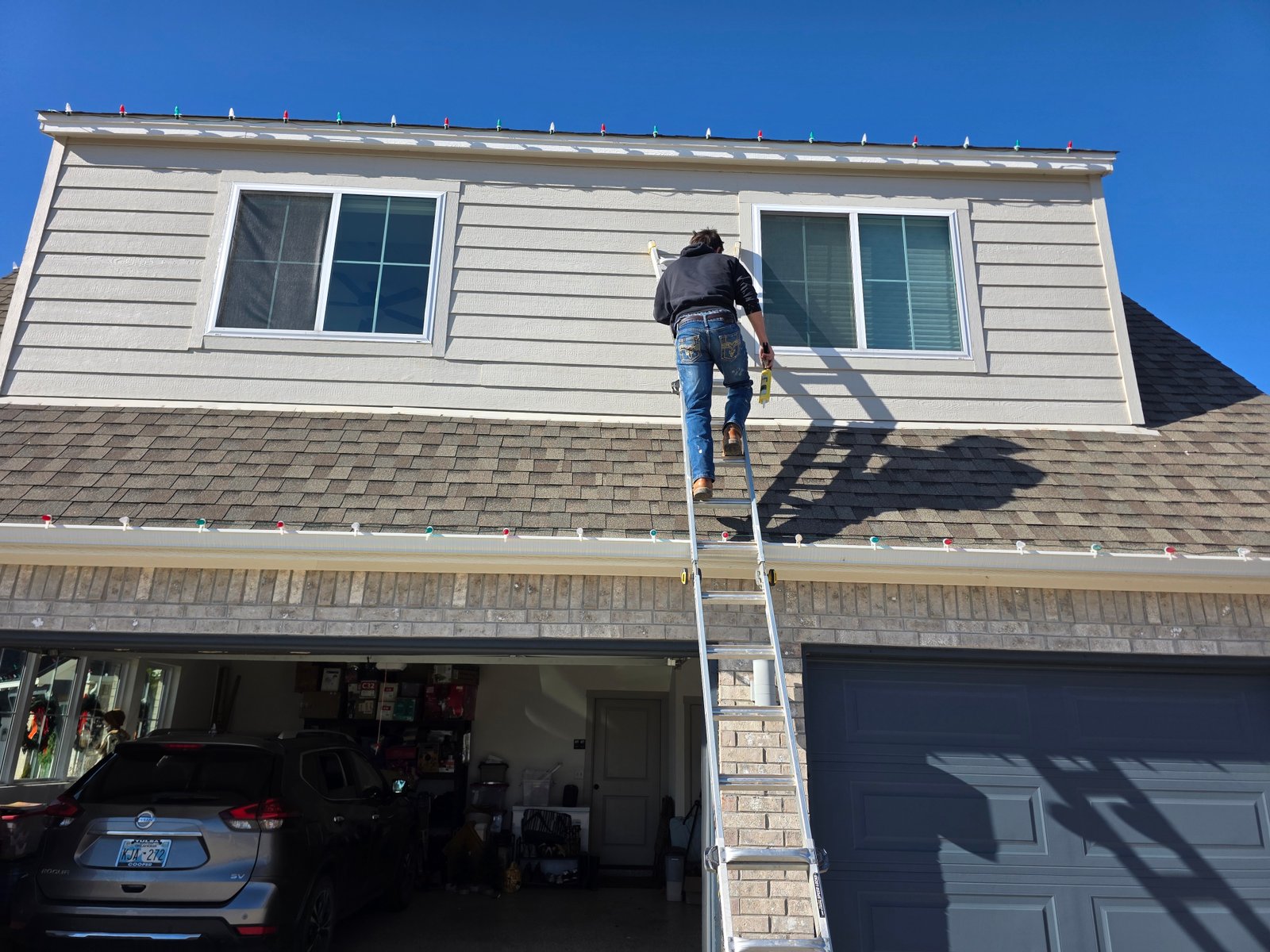
What Went Wrong With These Windows
Two second-story windows were installed incorrectly, creating a direct path for water intrusion.
1. The Windows Were Not Properly Caulked
Exterior caulking is the first barrier against water intrusion, but it must be installed correctly.
In this case:
- Window-to-trim joints were inadequately sealed
- Gaps were left exposed to wind-driven rain
- Water was able to migrate behind the exterior trim
Caulking alone is never enough — but when it’s poorly applied, failure becomes inevitable.
2. Missing ZIP Flashing Tape Around the Windows
This was the most critical failure.
Modern building standards require flashing tape (commonly ZIP flashing tape or equivalent) to be installed around window openings to direct water back outside the wall system.
On this home:
- No flashing tape was installed at the window openings
- Water that got past the exterior trim had nothing stopping it
- Moisture traveled behind the window flange
- Water entered the OSB sheathing and framing
- Gravity carried the water down into insulation and drywall below
Once water gets behind the sheathing, damage spreads silently.
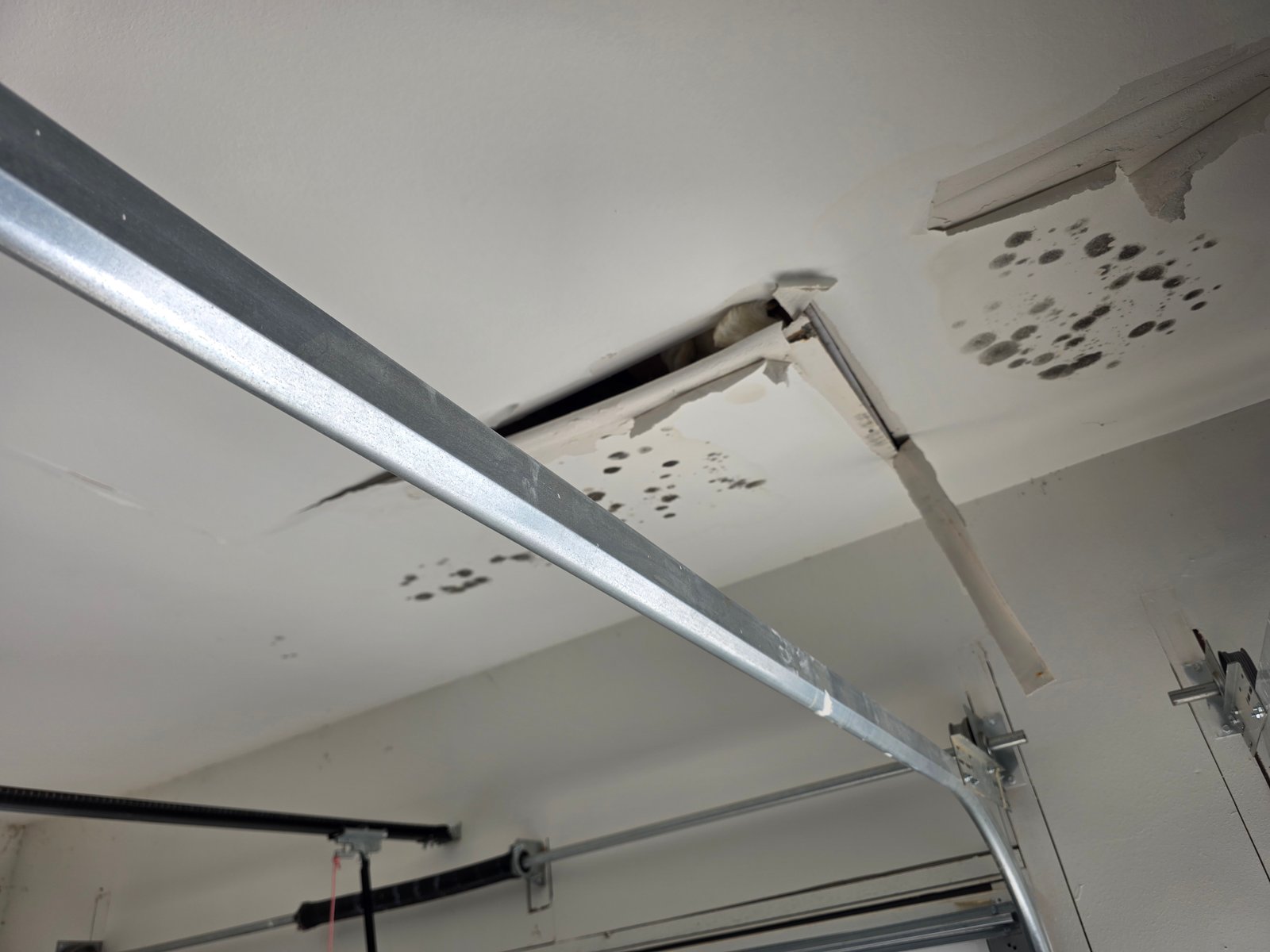
The Result: Interior Water Damage and Drywall Failure
By the time the homeowner noticed the issue inside the garage:
- Insulation was saturated
- Drywall had absorbed significant moisture
- The drywall lost structural integrity
- The ceiling began to sag, crack, and fall
This type of damage often goes unnoticed for months or years, especially when the source is second-story windows.
Why This Is Happening More Often in New Construction Homes
We are seeing this more frequently in Tulsa, Broken Arrow, Owasso, Collinsville, and surrounding areas, particularly in homes built within the last 5–7 years.
Common contributing factors include:
- Fast-paced construction schedules
- Subcontractors skipping critical steps
- Over-reliance on caulking instead of proper flashing
- Minimal inspections behind exterior trim
- Labor shortages during peak building years
Caulk is not waterproofing. Flashing is.
What to Do If You Suspect a Window Leak
If you’re seeing staining, cracking drywall, or recurring caulk failure around a window, here’s the safest next step:
- Take photos of stains, cracks, sagging drywall, and exterior trim gaps (before any repairs).
- Check after rain for fresh wet spots or active drips around windows or ceilings below upper windows.
- Don’t just re-caulk over a wet or failing system—caulk can hide symptoms while water continues inside the wall.
- Get the source confirmed so repairs stop the water at the correct layer (flashing / WRB integration / trim transitions).
Warning Signs Homeowners Should Watch For
If you own a newer home, watch closely for:
- Water stains near windows or ceilings
- Bubbling, cracking, or sagging drywall
- Musty odors near exterior walls
- Swollen or peeling trim
- Temperature differences or drafts near windows
If you see any of these signs, water may already be inside the wall system.
How Window Installations Should Be Done Correctly
A proper window installation includes:
- Correct preparation of the rough opening
- Flashing tape installed at:
- Window sill
- Side jambs
- Head flashing
- Proper integration with the weather-resistant barrier
- Correct exterior trim installation
- High-quality exterior caulking as a secondary defense, not the primary one
Skipping flashing creates a failure point — every time.
How Tulsa Discount Exteriors Helps Homeowners Avoid Costly Damage
At Tulsa Discount Exteriors, we don’t just replace windows. We evaluate the entire water management system. That includes the window, the trim, and how the surrounding exterior is supposed to shed water.
If you’re exploring window replacement options, we can help you avoid repeat issues by focusing on proper installation details. We also look closely at siding and trim water management around openings, because many leaks are caused (or worsened) by transition details.
Our inspections focus on:
- Proper window flashing and sealing
- Hidden moisture intrusion
- Exterior trim and siding details
- Early signs of structural damage
- Repair solutions that stop the problem at the source
We routinely find defects in homes that are only a few years old.
New Doesn’t Always Mean Protected
This home looked perfect from the outside.
Behind the walls, water was quietly doing damage — until the drywall failed.
If your home was built recently and you’re unsure how the windows were installed, a professional inspection now can prevent thousands of dollars in future repairs.
Frequently Asked Questions
Is caulk enough to stop a window leak?
Usually not. Caulk can help as a secondary seal, but proper flashing and correct integration with the wall system are what reliably manage water over time. If flashing is missing, water can still get into the wall even with fresh caulk.
Can this happen even if the window is “new”?
Yes. In many cases, the window itself is fine—the failure is in the installation details. Missing flashing tape and poor sealing can allow water intrusion even on newer, high-end homes.
How do you confirm where the leak is coming from?
We look at the full assembly: trim joints, flashing details, the window opening, and how water is supposed to exit the wall system. The goal is to confirm the source so repairs stop the leak at the correct layer.
Note: Every home is different. This article explains a common failure pattern we see in Tulsa-area homes, but an on-site inspection is the best way to confirm the true source before repairs are made.
Schedule a Window & Water Intrusion Inspection
If you’re in Tulsa or the surrounding areas and are concerned about window leaks, water damage, or construction defects, contact Tulsa Discount Exteriors today. If you want a straightforward opinion (no pressure), we’ll tell you whether it’s a window issue, a trim/siding transition issue, or something else entirely.
Early detection saves money.
Correct installation protects your home.
Ready to get it checked? Book an inspection / estimate here.